What not answering the phone costs your business
The math to work out, using your own numbers, what your business loses every single week to the calls and messages that nobody gets to in time.
It's 7:20 on a Tuesday evening. A woman in Coral Springs just bit down on something hard and cracked a molar. It doesn't hurt yet, but she knows it will tomorrow. She searches on her phone, finds three practices nearby, and calls the first one.
Six rings. Voicemail.
She calls the second. A recording tells her to call back during office hours.
She calls the third. Someone picks up, takes her details, and books her for nine tomorrow morning.
The first two practices never knew that call existed. That's the part of the problem almost nobody measures.
Why you never find out
A sale lost on price leaves a trace: somebody asked, heard the number, and didn't come back. Someone remembers it.
A call nobody answered leaves nothing. It isn't in your practice management report, because the caller never became a patient. It isn't in your books, because no money moved. It isn't in your team's conversations, because nobody was there to have one.
All that's left is a number in the phone's call log, mixed in with vendors, reminders and spam. Nobody reviews that on an ordinary Tuesday.
Which is how a business owner can lose three or four customers a week for two years without a single report ever saying so.
The math
I'm not going to tell you what you're losing. I don't know, and anyone who tells you without looking at your numbers is making it up.
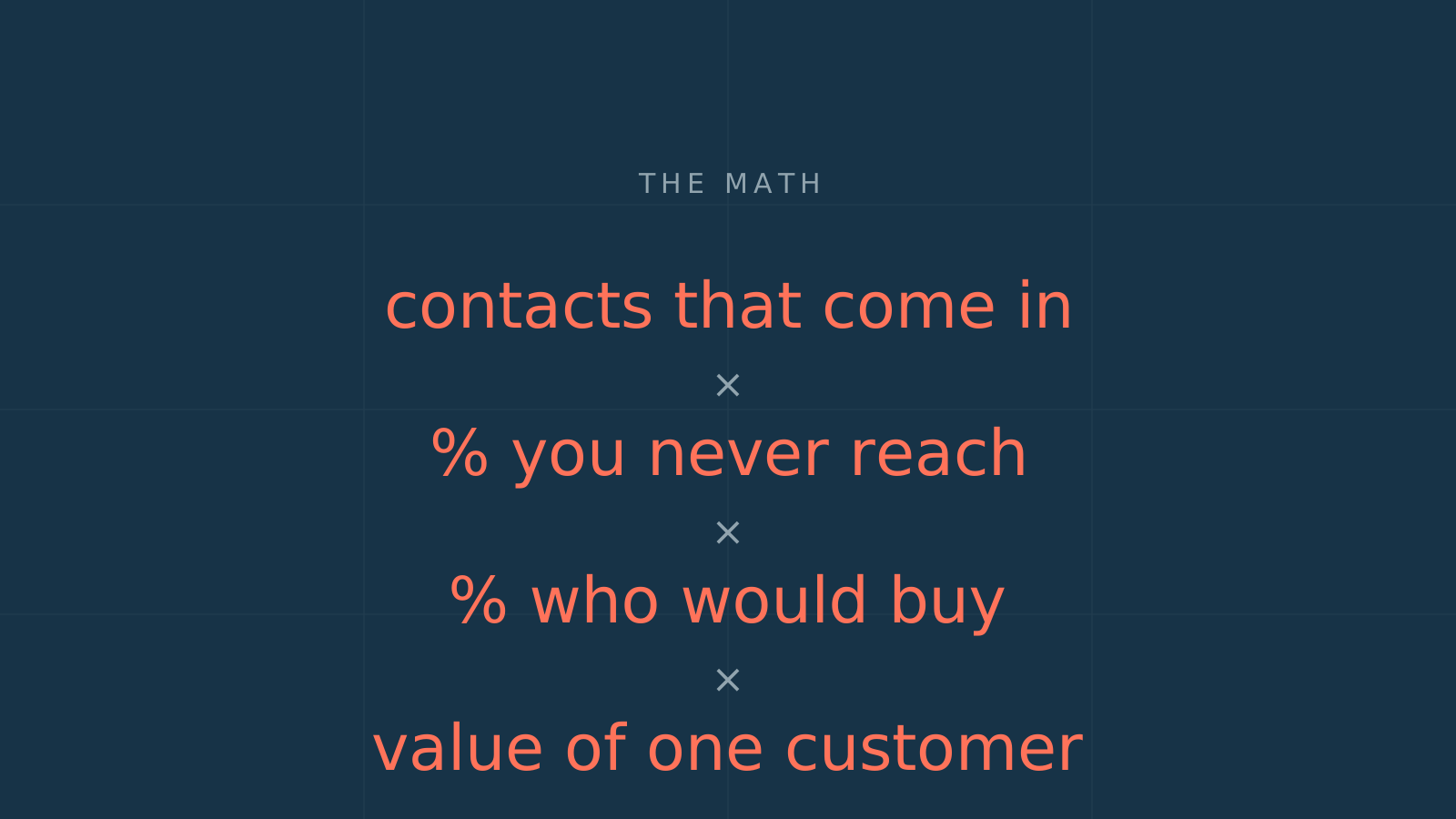
Here's the math so you can run it yourself. Four variables, and you already know all four:
contacts that come in per week × % you never get to × % who would have become customers × value of one new customer
That's what slips away in a week. Multiply by fifty-two for the year.
Now, how to estimate each one without installing anything.
Contacts that come in per week
Add three things: calls to the business number, WhatsApp messages, and website forms or chats.
For calls, open the call log on the business phone and count a normal week — not a holiday week. For WhatsApp, count new conversations in that same week. A rough number is fine; you don't need accounting precision.
Percentage you never get to
This is the one that surprises people. From that same week, count how many came in when nobody was there: after closing, during lunch, on a Saturday, or while you were with a customer and the phone rang with nobody free to pick it up.
On a cell phone those show up as missed calls. On WhatsApp they're the conversations where the customer's first message and your reply are hours apart.
Percentage who would have converted
Of the people you do reach, what share ends up buying or booking? If four out of every ten callers become appointments, your rate is forty percent.
Use that same number. It's a conservative estimate: people who call after hours usually have more urgency, not less.
Value of one new customer
There are two ways to count this, and the difference matters.
The first is what the first visit brings in. The second is what the customer is worth across the whole relationship: the follow-ups, the cleaning every six months, the family member they refer.
A dental practice that bills a hundred and fifty dollars for a first consult but keeps the patient three years isn't looking at a hundred and fifty — it's looking at considerably more. Use the number that reflects your reality, not the smallest one.
Run the numbers
Put your numbers in. Nothing is sent anywhere; the math happens in your browser.
Per week
Per year
An estimate built from the numbers you entered, not an industry average.
If the number looked high, it isn't because the math is inflated. It's because you had never run it.
What to do with the number
There are three paths, and one of them is doing nothing.
Do nothing. That's a legitimate answer. If the number came out to forty dollars a week, close this page and get back to work: any fix will cost you more than it recovers. I just saved you a sales call.
Hire a person. Someone to answer. It works well and has one advantage nothing else does: a human understands what falls outside the script. It costs a salary, and it covers the hours that person works — which probably don't include 7:20 on a Tuesday or Saturday afternoon.
Automate the first response. An assistant that answers WhatsApp, chat and messages when nobody's there: it responds with what's in your script, books when it can, and hands off to a person what it can't resolve. It covers the dead hours for a fraction of a salary, and it doesn't replace your team — it answers when your team isn't there.
Which of the three suits you depends on the number you just got and on how many hours a day your business has nobody to answer.
What I can promise
That you leave with a number.
In twenty minutes on video we put your real data into this same math, in more detail than a web calculator holds. Out comes what not answering is costing you, and what changes if it gets fixed.
If the return isn't there, I'll tell you on the call and I won't sell you anything. I'd rather do that than bill you for six months of something that was never going to help.